You bring home a new fish on a Saturday. It looks perfect. Bright, active, healthy. By Wednesday, your display tank — the one you've worked on for two years — is covered in white spots. Now you're dosing copper into a tank with shrimp. Now your plants are dying. Now you're wondering if the whole thing is salvageable.
This is the story I keep hearing. And it's preventable.
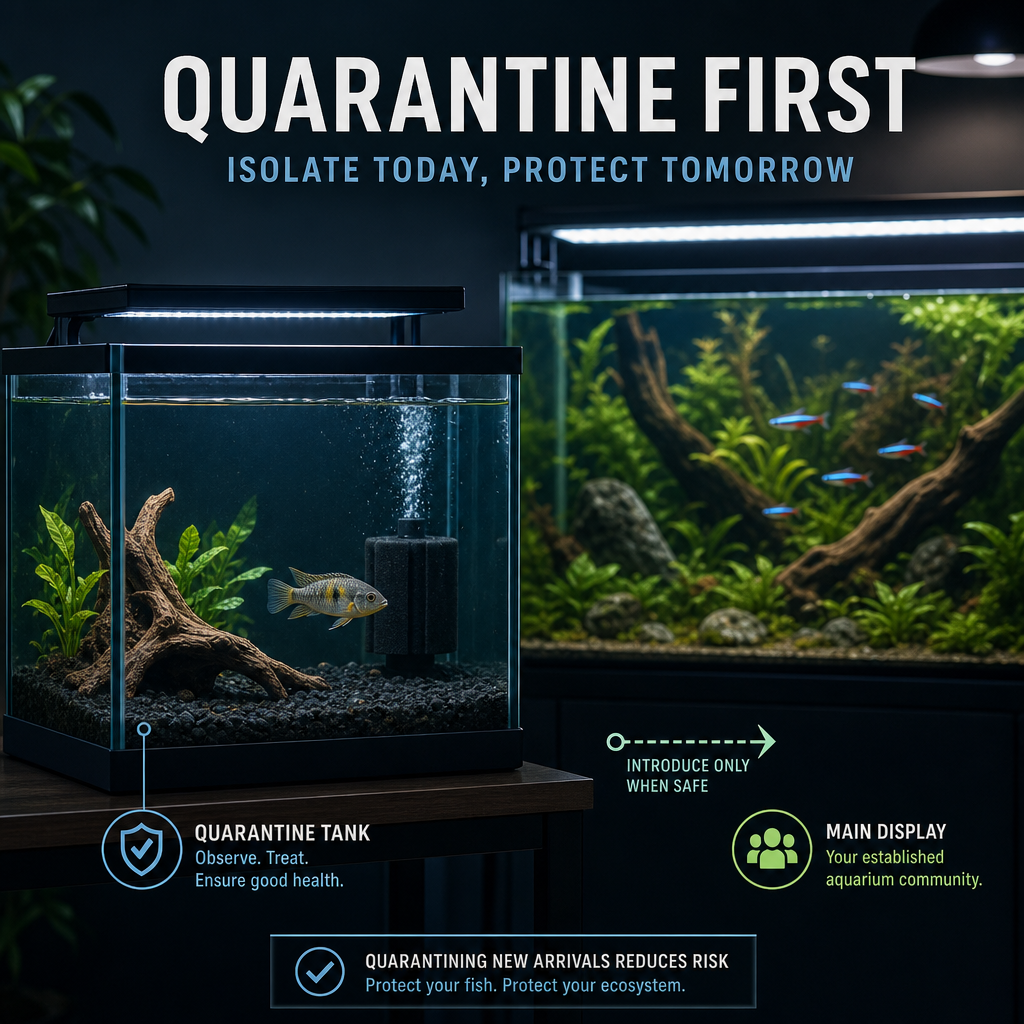
A quarantine tank isn't a luxury. It's a small, separate aquarium — usually bare-bottom, no substrate, no plants — where new fish sit for a few weeks before joining your main system. That's it. Simple hardware. Big impact.
Here's what it stops.
Why use a quarantine tank: the benefits
- Catches disease early. New fish carry pathogens they don't show symptoms of. A quarantine tank gives those pathogens time to surface before they reach your display.
- Contains outbreaks. Treating 20 gallons of water is cleaner, cheaper, and safer than dosing a 200-gallon display full of shrimp and plants.
- Protects invertebrates and plants. Copper, malachite green, and formalin kill shrimp, snails, and aquatic plants. In a quarantine tank, they never touch them.
- Gives you an observation window. Two to four weeks to watch feeding behavior, stress signs, and color changes before the fish joins your main system.
- Solves non-disease problems. Injured fish, shy eaters, breeding pairs, aggressive bullies, temporary holding during tank upgrades.
- Saves money. A $30–50 setup costs less than one outbreak that wipes out livestock.
Disease travels on new fish
When you buy a fish at a store, it's stressed. Transport stress suppresses the immune system. Any pathogen the fish was carrying, whether it showed symptoms or not, gets a chance to bloom. This is the asymptomatic carrier problem. A fish can look completely healthy and still be shedding parasites or bacteria.
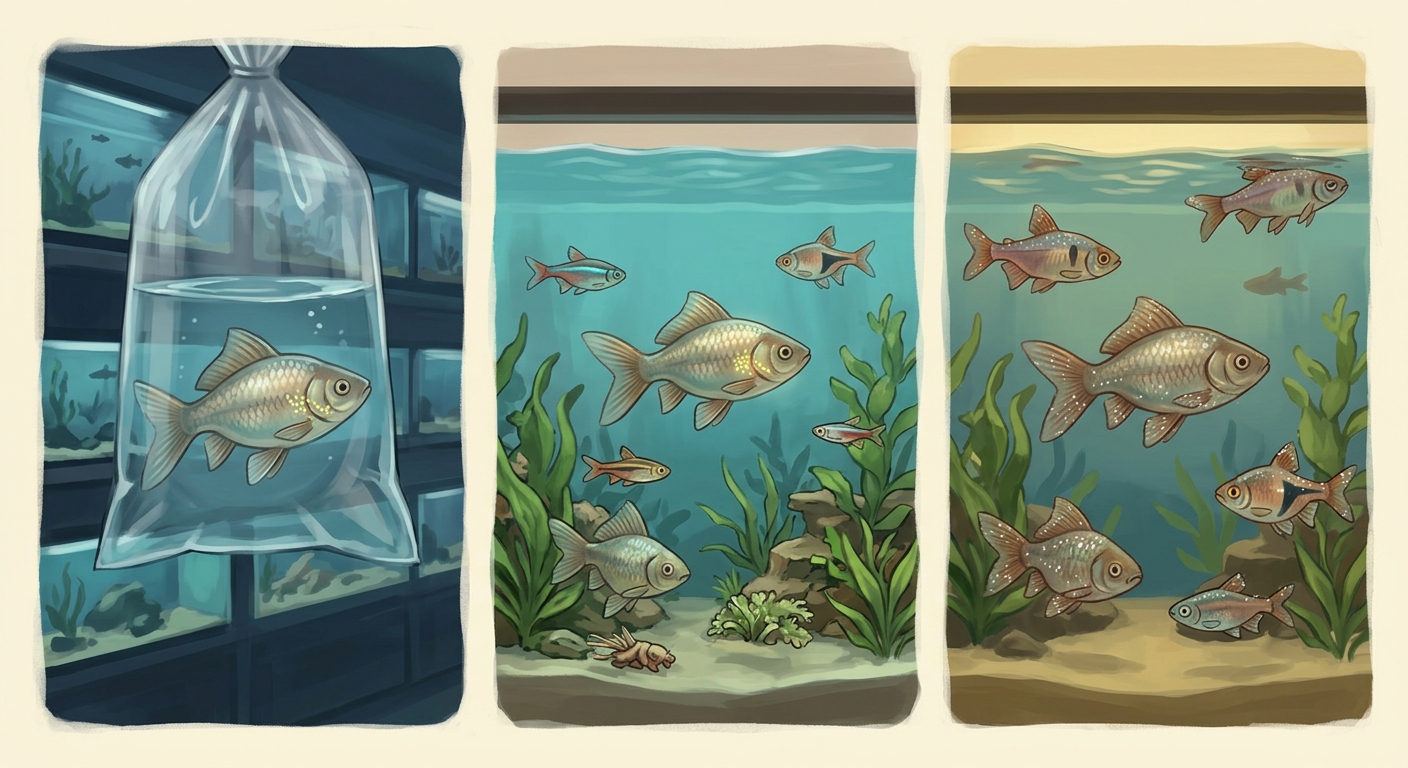 The Spanish aquarium trade survey from 2015–2016 looked at 12 retailers across Barcelona and Seville. They found 11 fish species consistently showing clinical disease signs. When researchers surveyed 100 aquarists, 52 percent reported fish deaths after introducing new fish to their tanks. That's not rare. That's the expected outcome if you're not careful.
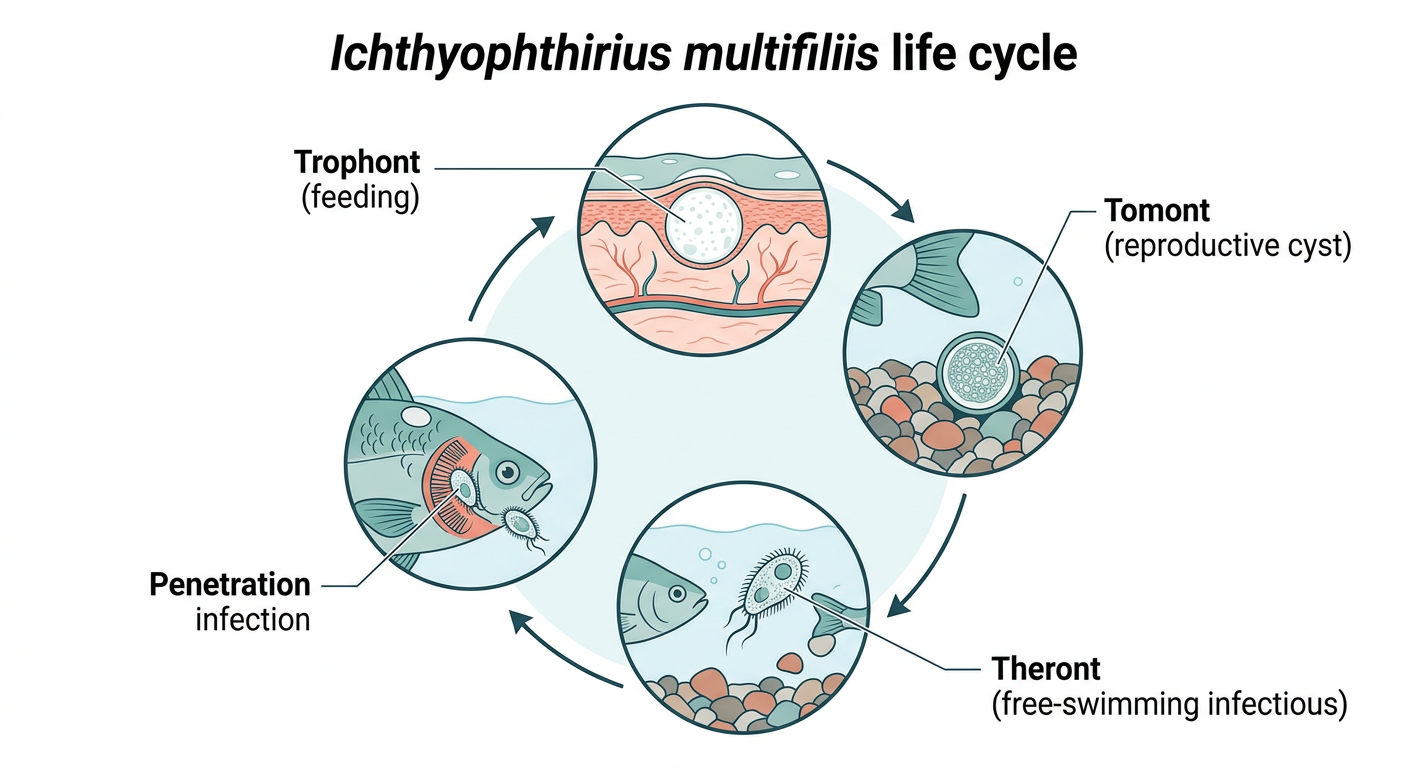
Ich, the white spot parasite, accounts for about 62 percent of reported disease cases in home aquaria. Bacterial infections hit 30 percent. The rest splits between dropsy, flukes, and other parasites. Ich is the number one problem because it's fast and the transmission is efficient. A single Ich parasite can produce up to 1,024 infective offspring in one generation. If left untreated, it causes near-total mortality within weeks.
That's a real risk. The difference between a stable tank and an emergency.
Quarantine catches it early
A quarantine tank gives you a window. Two to four weeks. You're observing the new fish in isolation, looking for flashing, rapid rubbing on surfaces, clamped fins, rapid breathing, weight loss, color loss. These are early signals.
If something's wrong, you catch it in a 20-gallon tank instead of a 200-gallon display.
To treat Ich in your main display, you're dosing formalin or malachite green every day for at least 7–14 days. The parasite cycle at 75–79 degrees runs anywhere from 48 hours to 6 days depending on the stage. You need to keep medication running through at least one complete life cycle so all the stages get exposed. Only the free-swimming stage is vulnerable to treatment. The other stages are protected inside a cyst or embedded in the fish's skin. This is why you can't just dose once and be done.
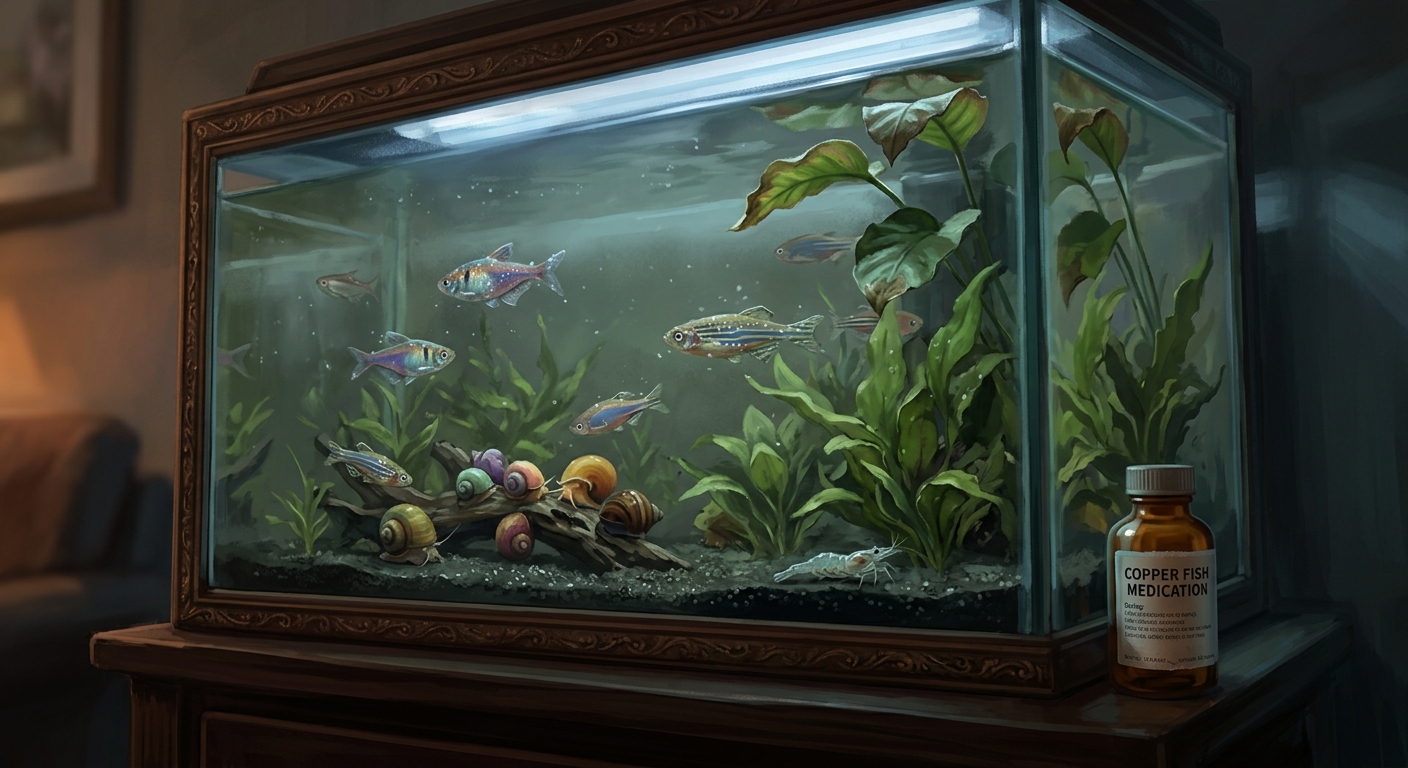
 But now you've dosed a 200-gallon system. Your shrimp are dead. Your plants are dying or gone. Your snails are dissolving. Your beneficial bacteria are stressed. You may see an ammonia spike because antibiotics, sometimes used for secondary infections, can suppress nitrifying bacteria. Now you're managing a cascade, not treating a parasite.
 In a quarantine tank, you dose the same medication into 20 gallons. Scale it down. Stress is lower. Treatment is cleaner. If something goes wrong, you're resetting one small tank, not your entire ecosystem.
Quarantine is a firebreak
One infected fish in your display is a system-wide problem. One infected fish in a quarantine tank is a contained problem.
Copper-based medications are lethal to all invertebrates at therapeutic doses, 0.15–0.25 ppm. They bind to substrate and silicone and leach back into the water for weeks or months. A copper-treated tank might never be safe for shrimp again without a substrate rip-out and chemical filtration.
Malachite green and formalin are toxic to scaleless fish, loaches, catfish, corydoras. They're lethal to shrimp and snails at full dose. Some products stain silicone seals permanently.
Salt, which some keepers try instead, stresses most aquatic plants, scaleless fish, and snails above 1 gram per liter. And it's less effective at controlling parasites. In controlled comparisons, salt reduces mortality by roughly 40 percent. Proper formalin or malachite green treatment hits near 100 percent.
When you treat a display tank, you're making a choice about what lives and what dies in that system. When you treat a quarantine tank, you're only affecting the quarantine tank.
Beyond disease: other problems a quarantine tank solves
Quarantine tanks aren't just for sick fish. That's the most common misunderstanding.
I use quarantine tanks for injured fish. A fish with torn fins from aggressive tankmates needs isolation while it heals. In the main tank, other fish will nip at the injury. Predatory behavior targets weakness. In quarantine, the fish rests, heals, and builds strength without getting harassed.
Shy or slow-eating fish benefit from quarantine. Some fish are visually impaired. Some are just cautious new arrivals. In a packed display tank, they'll lose food to faster competitors. In quarantine, they get guaranteed food access. This matters for conditioning underweight fish or helping them adjust to captive feeding.
Breeding pairs? Conditioning them in quarantine gives you control over diet, temperature, and photoperiod without disrupting your main system. Same for fry rearing or a brooding mouthbrooder that needs isolation.
Aggressive fish sometimes need a timeout. Remove a bully for one or two weeks and reintroduce it. The territorial hierarchy resets. Dominance behavior breaks. This works better than trying to rearrange decor in your display.
When you're upgrading a tank or rearranging a display, quarantine holds fish temporarily. No rushed moves. No stress of crowding everything into a holding tub.
Hospital tank versus quarantine tank
These terms get mixed up. They're different things.
A quarantine tank holds new or unconfirmed fish to watch for disease before they enter your main system. The fish inside may be perfectly healthy. You're just making sure.
A hospital tank treats fish that are already sick. It's where you run medications, observe symptoms, and manage recovery for fish pulled from your display.
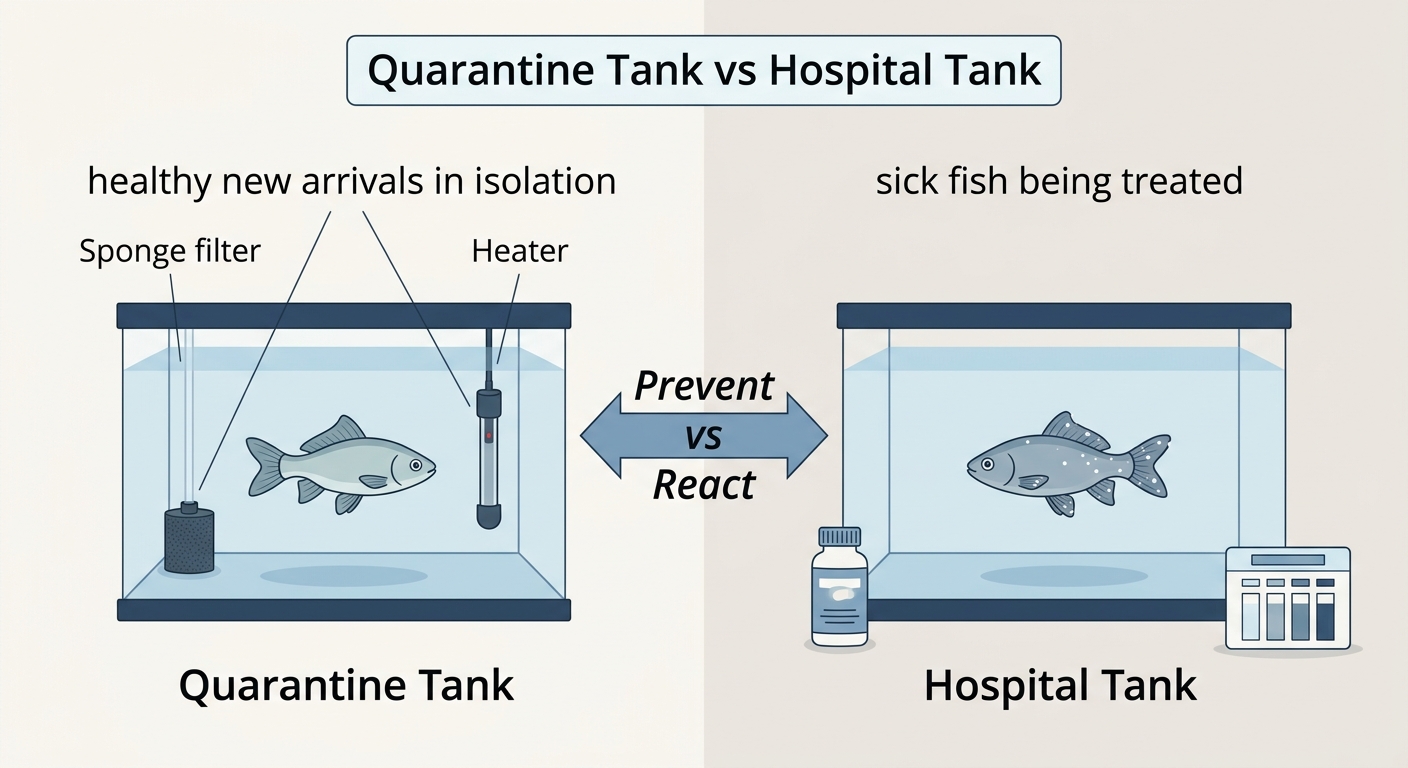 Ideally, you'd run both. If you can only set up one, a quarantine tank prevents more problems overall. A hospital tank reacts after the damage is done. Prevention beats treatment, especially when treatment risks your entire display ecosystem.
Many aquarists use a single bare-bottom tank for both. That works. Just be aware: when you move a sick fish into your quarantine tank, it becomes a hospital tank. Clear it, disinfect it, and let it cycle before you use it for new arrivals again.
The math of prevention versus outbreak
A basic 10-gallon aquarium quarantine tank setup costs $30–50. That's a glass tank during a sale, a basic heater, a sponge filter, an air pump if you don't already own one, and a hiding spot. A plastic storage tub version runs $10–25 if you want to go ultra-budget.
Medication to treat a single display-tank outbreak? $15–25 in copper, formalin, or malachite green. That's just the chemical cost. You're not counting the plants that die, the shrimp that die, the potential ammonia spike, or the time spent managing it.
One fish that costs $5 introduces Ich that kills $50–200 of existing livestock. I've seen this happen. A single goldfish from a box-store purchase started an outbreak that wiped out a long-established planted tank. The replacement livestock and plants cost several hundred dollars. The tank had to be drained, scrubbed, and re-cycled.
Worst case: medication crashes beneficial bacteria. Ammonia spikes. Multiple fish die. Inverts and plants die. The tank is now compromised. You tear it down. You re-cycle for 4–8 weeks. You restock. Total cost: $300–1,000 and up depending on stocking and the tank size.
A $30–50 quarantine tank pays for itself the first time it catches one sick fish.
Why quarantine tanks feel like a hassle, but aren't
The barrier isn't equipment. It's space and "I don't know if I'll even need it."
Quarantine tanks sit idle most of the time. That's fine. You run them on a schedule: keep the filter media alive and the barrel cycled so it's ready when you need it. Some people run it continuously with a few small plants. The plants help the isolation feel less stark. Others drain it and restart it when a new fish arrives.
Space is real. But a 10-gallon tank is small. It fits under a shelf, in a utility closet, even on a desk. If you have room for your main display, you have room for quarantine.
Mindset is the bottleneck. "I've never needed one before. Why start now?" That's selection bias. You've been lucky. One introduction is still a roll of the dice. Your luck can change with a single $3 feeder goldfish from the wrong supplier.
It works like insurance. Homeowners insurance sits unused for years. The moment you need it, a fire or a flood, you're glad it exists. Quarantine works the same way.
When you might skip quarantine, and when you absolutely can't
I'm not going to tell you that everyone needs a quarantine tank. That's not honest.
If you're stocking a single-species tank from a breeder you trust, with low-value, hardy fish, in a fallow setup? Quarantine is less critical. The risk is lower.
If you're adding one goldfish to an established tank of goldfish from a reputable local breeder? Still lower risk.
But if you're keeping sensitive species, rare plants, expensive fish, fancy goldfish, wild-caught stock, quarantine isn't optional. It's mandatory. One failed introduction erases years of work.
Same goes for saltwater. A common reef setup with dozens of species stacked into 60 gallons? A disease outbreak is catastrophic. Quarantine is the only responsible choice.
If you're a new aquarist, quarantine. You don't know the signals yet. You can't read fish behavior the way experienced keepers can. Quarantine buys you safety while you learn.
If you have an old, heavily-stocked display that's stable and proven, that tank is worth protecting. Quarantine.
If you're planning to keep fish for years rather than months, quarantine.
The honest answer: the more you care about your tank, the less you can afford to skip it.
Common quarantine tank questions
How long do I quarantine new fish? Two to four weeks minimum. Two weeks works for hardy species from a trusted supplier. Four weeks is safer for wild-caught fish, sensitive species, or any stock from a supplier you don't know. If symptoms appear during quarantine, start the clock over from when the last symptom resolved.
What size should a quarantine tank be? A 10-gallon handles most small freshwater fish. A 20-gallon works better for medium fish or holding multiple arrivals at once. Saltwater quarantine tanks often run 20–30 gallons. Bigger isn't necessary. Manageable beats impressive.
Does a quarantine tank need to be cycled? Yes, ideally. A cycled filter means you can medicate without also fighting ammonia. The simplest trick: keep a spare sponge filter running on your main tank. When you need the quarantine tank, move that sponge into it. Instant biological filtration.
Set it up now
I've kept notes on outbreaks for years. I've seen tanks crash. I've watched people lose fish they'd raised for five years to a preventable introduction. I've also seen quarantine tanks sit empty for months and then catch a single fish carrying Velvet, saving everything else.
The peace of mind is real.
You don't need anything fancy. Bare-bottom tank. Heater. Simple filter. Optional light. Run it idle or semi-idle. Let it sit there. Most of the time, you won't need it.
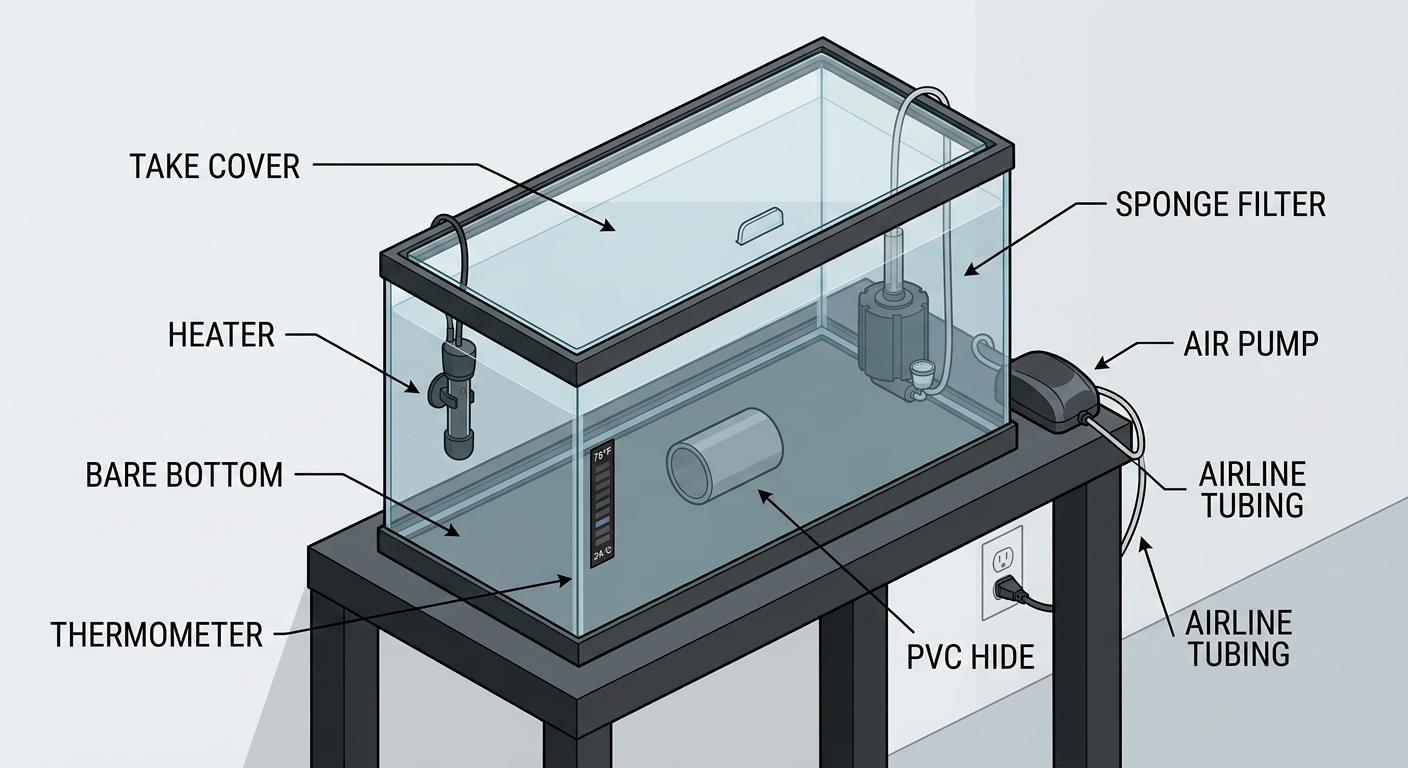 But when you do, when you find spots on the new fish or when aggression flares up or when you need to isolate an injured animal, you'll have it. And you'll be grateful.
Set it up now, before you need it. When the moment comes, you'll be ready.
Comments
No comments yet.